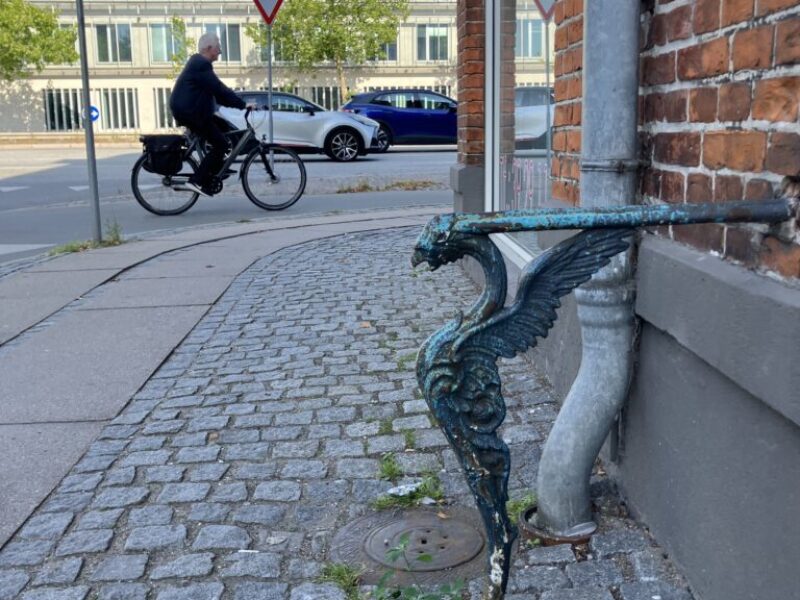
Saying goodbye to Denmark
Saying goodbye to Denmark was harder than I thought. Like most vacations, I was initially jolted out of the routine bubble and confronted with old feelings that rise to the surface, especially when reconnecting with siblings on holiday. But I was surprised most by the feelings of leaving this new place, particularly its water elements, a renewed connection with my brother, and a deeper dive into a culture different from my own.
At first, I just felt sad. My body felt heavier and my face muscles turned down. Then I “labeled” the feeling as that of impermanence because even as I wanted to hold on to the memories, I knew I couldn’t. But now I’m not sure if the feelings of confusion that arise from impermanence was what I was feeling. It was more like knowing on a non-verbal level that I had been changed by the travel, and I’m still letting that run through my body.
Traveling to Denmark captured feelings of in-congruence that normally don’t even register to the sense-body in my day to day life. I was forced to encounter:
- past moments in history (voices of Viking pillagers heard from their boats) lapping alongside the voices of my nieces playing clap games in Danish that sounded like the “Big Mac” jingle–To all beef patty spec
 ial sauce lettuce cheese pickle onion on a sesame seed bun!
 - The vibrant color of coral painted fresh on a boat in the Copenhagen canal atop the green patina formed by years of copper mingling with oxygen and moisture.
- The impromptu nature of a food crawl down the high street running next to the longing to connect with a tradition, like eating a piece of “kanelstang” with family at Christmas. “Kanelstang” means cinnamon stick or cinnamon social and is usually braided or twisted.
This movement back in time followed by a pull to the present feels like motion sickness and staring directly at the shoreline.
I’ve returned to my journal to help process this new feeling. I’ve made a list of images that capture impermanence (the ferry to Oro leaving and arriving) and in-congruence (metal scultpures of frogs, cranes, and gryphons intervene in my trip to the Kvickly grocery store or to the “ristet” grilled hotdog stand). The images, I hope, may help me prep a future poem about this question: How does leaving a new place change you?
I’ve also made list of things I’d like to bring back with me from Denmark into my regular life. This assimilation of new/unknown things into my routines may also bring clear meaning about this question of saying goodbye. I know I want to make smorrebrod for a family meal and explore the idea of having more “third spaces” with my friends and family like the Danes do. 
For now, I’m content to live into the questions, as Rilke urges us to do in his Letters to a Young Poet (written from 1903 – 1908). I’m always so moved by his gentle advice to Franz Kappus, a young poet finding his way in the world. And while I could simplify his message as “Look within” or “Time will offer an answer,” I’d rather just leave you with his own words. Rilke knew about travel as synonymous with the movement of our inner worlds. I am taking his words written across all this time as a gift to me in this moment:
In the great silence of these distances, I am touched by your beautiful anxiety about life, even more than I was in Paris, where everything echoes and fades away differently because of the excessive noise that makes Things tremble. Here, where I am surrounded by an enormous landscape, which the winds move across as they come from the seas, here I feel that there is no one anywhere who can answer for you those questions and feelings which, in their depths, have a life of their own; for even the most articulate people are unable to help, since what words point to is so very delicate, is almost unsayable.
But even so, I think that you will not have to remain without a solution if you trust in Things that are like the ones my eyes are now resting upon. If you trust in Nature, in the small Things that hardly anyone sees and that can so suddenly become huge, immeasurable; if you have this love for what is humble and try very simply, as someone who serves, to win the confidence of what seems poor: then everything will become easier for you, more coherent and somehow more reconciling, not in your conscious mind perhaps, which stays behind, astonished, but in your innermost awareness, awakeness, and knowledge.